WHY MAKE IT
A little comfort, a lot of flavor.
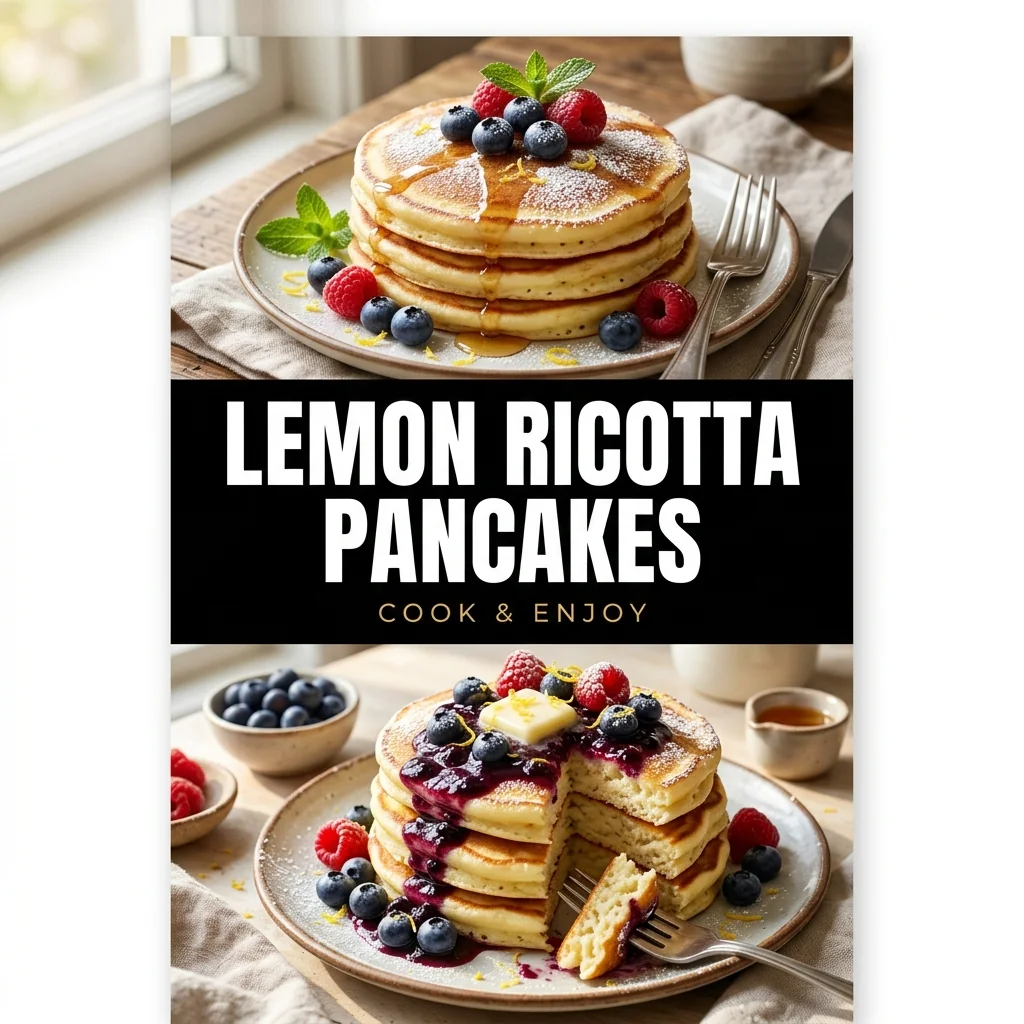
Lemon ricotta pancakes elevate ordinary weekend griddle cakes into a souffle-like morning luxury. The addition of creamy whole-milk ricotta infuses the crumb with a moist, custardy tenderness without making the center sodden or dense. Fresh lemon zest contributes essential oils that lend an aromatic brightness that cuts through rich dairy fat, while lemon juice activates the baking soda for initial leavening lift. By separating the eggs and folding whipped whites into the resting batter, you incorporate pockets of air that expand over gentle skillet heat. The finished pancakes boast a golden exterior, an open interior crumb, and a delicate citrus fragrance.
The Power of Aerated Egg Whites
While standard pancake batters rely exclusively on chemical leaveners like baking powder and soda, this recipe leverages mechanical aeration through whipped egg whites. Whipping the whites to stiff peaks traps thousands of tiny air bubbles within an elastic protein mesh. Folding this foam gently into the thicker ricotta and flour base creates a batter buoyant enough to trap heat-induced steam quickly. As the batter cooks on the griddle, these expanding micro-bubbles produce an exceptionally airy, melt-in-your-mouth crumb that sets firmly without collapsing into flat rubber.
Zest Versus Juice for Flavor
The secret to distinct lemon character in baked goods lies in the peel, not just the acidic juice. The outer yellow flavedo of fresh lemons contains concentrated aromatic oils that infuse the batter with rich citrus perfume without altering acidity. Lemon juice, conversely, provides sharp citric acid that reacts immediately with the alkaline baking soda to yield carbon dioxide bubbles. By rubbing the freshly grated zest into the sugar or whisking it directly with the ricotta, you suspend those aromatic oils throughout the batter, ensuring bright citrus presence in every bite.
Mastering Griddle Heat Management
Ricotta pancakes are denser and contain more dairy sugars than basic buttermilk flapjacks, making them prone to scorching if cooked over excessive heat. Maintain medium-low heat on your griddle or cast-iron pan. The pancakes need roughly three to four minutes per side to allow heat to penetrate the thick batter, setting the custard-like center before the exterior over-browns. If you observe rapid browning before bubbles appear on top, lower your burner slightly and allow the pan temperature to equalize between batches.
Before you start
Ricotta quality directly impacts batter consistency. If your tub of whole-milk ricotta contains visible watery liquid whey, drain it through a fine-mesh sieve lined with cheesecloth or a paper towel for 15 minutes before measuring. Using wet ricotta introduces uncontrolled hydration, which dilutes the batter, weighs down whipped egg whites, and produces heavy, gummy pancakes rather than tall, airy discs.
THE RECIPE
Lemon Ricotta Pancakes
4 servings · 15 minutes preparation · 28 minutes cooking · 10 minutes cooling, chilling or resting
Ingredients
Step-by-step instructions
- In a large mixing bowl, whisk together the all-purpose flour, granulated sugar, baking powder, baking soda, and fine sea salt until thoroughly blended and free of clumps.
- In a separate medium bowl, whisk together the drained whole-milk ricotta cheese, egg yolks, whole milk, freshly squeezed lemon juice, finely grated lemon zest, pure vanilla extract, and melted butter until creamy and smooth.
- In a clean, dry medium bowl, beat the egg whites using a clean hand whisk or electric mixer on medium speed for 2 to 3 minutes until stiff peaks form when the beaters are lifted.
- Pour the ricotta mixture into the dry flour blend. Stir gently with a rubber spatula just until combined and mostly moistened; small flour streaks are acceptable at this stage.
- Add one-third of the whipped egg whites to the batter and fold gently to lighten the texture. Add the remaining egg whites, folding carefully from bottom to top until no white streaks remain, then rest the batter for 10 minutes.
- Heat a large nonstick griddle or cast-iron skillet over medium-low heat. Lightly grease the cooking surface with a thin coat of unsalted butter. Ladle 1/4-cup portions of batter onto the hot griddle, leaving 2 inches between each pancake.
- Cook for 3 to 4 minutes until bubbles rise and break on the surface, the edges appear set and matte, and the undersides are golden brown. Flip carefully using a wide spatula and cook the second side for 2 to 3 minutes until puffed and the centers are set with no wet batter. Repeat with remaining batter, serving warm immediately.
Kitchen notes
Ricotta quality directly impacts batter consistency. If your tub of whole-milk ricotta contains visible watery liquid whey, drain it through a fine-mesh sieve lined with cheesecloth or a paper towel for 15 minutes before measuring. Using wet ricotta introduces uncontrolled hydration, which dilutes the batter, weighs down whipped egg whites, and produces heavy, gummy pancakes rather than tall, airy discs.
Storage & make-ahead
Store leftover pancakes in a single layer or separated by parchment paper inside an airtight container in the refrigerator for up to 3 days. Any prepared perishables must be refrigerated within 2 hours. To reheat, arrange pancakes on a rimmed baking sheet and warm in a preheated 350°F (177°C) oven for 6 to 8 minutes until heated through to an internal temperature of 165°F (74°C).
An original recipe guide inspired by themes in our Pinterest research. Recipe has not been independently kitchen-tested. AI-generated image is illustrative; your finished dish may look different.
Frequently asked questions
Can I use part-skim ricotta instead of whole-milk ricotta?
You can, but whole-milk ricotta is strongly recommended. Part-skim ricotta contains higher moisture content and less milk fat, which can yield a flatter pancake with a slightly grainier texture compared to the rich, velvety crumb of whole-milk dairy.
Can I make this pancake batter the night before?
No. The batter relies on whipped egg whites and reactive baking soda for leavening. If left overnight, the foam will collapse and the chemical leaveners will exhaust their bubbling power, resulting in dense, flat pancakes. Whisk dry ingredients beforehand instead.
Can I freeze cooked lemon ricotta pancakes?
Yes. Let the pancakes cool completely on a wire rack, layer them between sheets of parchment paper, and freeze inside a sealed freezer-safe bag for up to 1 month. Reheat directly from frozen in a 350°F (177°C) toaster oven until heated to 165°F (74°C).