WHY MAKE IT
A little comfort, a lot of flavor.
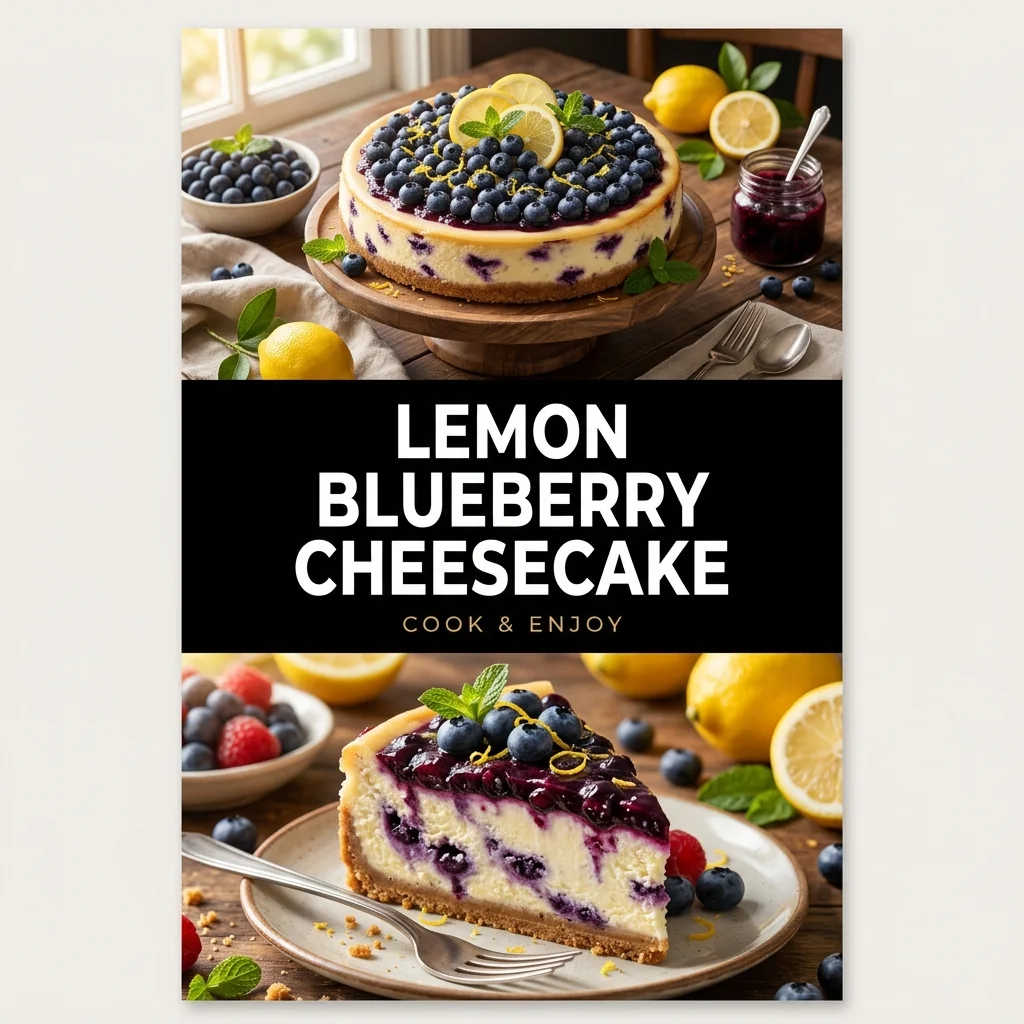
The pairing of bright citrus acidity and dark, aromatic blueberries provides a natural foil to the richness of cultured cream cheese. This recipe incorporates both cold-pressed lemon zest and freshly squeezed juice directly into the cheesecake base, yielding a fragrant, bright flavor profile that avoids artificial undertones. Rather than spooning a simple fruit topping over a plain baked cake, a concentrated wild blueberry reduction is marbled directly throughout the batter. This integration ensures that every forkful captures both the bright lemon custard and the deep, jammy sweetness of cooked berries, supported by the foundational crunch of a toasted butter-graham crust.
Starch Stabilization for Fruit Swirls
Marbling fruit purees into raw cheesecake batter poses significant moisture management challenges. Fresh berries release substantial water as their cell walls break down under oven heat. Unbound water pools around the marble veins, creating pockets of gummy, undercooked custard. By cooking the blueberries down with a dedicated cornstarch slurry, you lock the free water into a stable starch gel. This prevents syneresis during the prolonged baking cycle, ensuring that the fruit ribbons remain distinct, glossy, and structurally cohesive with the surrounding lemon cheesecake matrix.
Managing Citrus Acidity in Dairy
Lemon juice contains citric acid, which alters the charge on milk proteins, causing rapid curdling if introduced incorrectly. To maintain an ultra-smooth emulsion, always blend the cream cheese, sugar, and cornstarch together first. The sugar and starch molecules coat the dairy proteins, providing a protective buffer. Add the lemon juice and aromatic zest gradually alongside the heavy cream while mixing at low speed. This gradual incorporation allows the fat globules to stay suspended, ensuring a luscious, velvety texture free of graininess or premature curdling.
Water Bath Insulation and Steam Control
Baking fruit-marbled cheesecakes requires precise heat modulation. The sugars in the blueberry compote caramelize faster than the dairy base, making them vulnerable to scorching if exposed to uneven dry heat. The water bath ensures that temperatures around the pan perimeter remain constant and buffered at the boiling point of water. The humid atmosphere inside the oven chamber also shields the surface from premature skinning, allowing the cheesecake to expand smoothly without tearing through the delicate blueberry design drawn on top.
Before you start
Simmering the blueberry compote until properly thickened with cornstarch is critical. If your fruit puree contains excess water, it will weep liquid into the cheesecake during the long bake, creating soggy soft pockets around the swirls. Ensure the compote is completely cooled to room temperature before swirling it into the raw cheesecake batter.
THE RECIPE
Lemon Blueberry Cheesecake
12 servings · 35 minutes preparation · 80 minutes cooking · 480 minutes cooling, chilling or resting
Ingredients
Step-by-step instructions
- Preheat the oven to 350°F (175°C). Line the base of a 9-inch (23 cm) springform pan with parchment paper and grease the internal sides. Tightly wrap the underside and outer walls of the pan with two layers of heavy-duty aluminum foil to guard against moisture.
- Combine the graham crumbs, melted butter, and 25 grams of sugar in a bowl. Press the mixture firmly into an even layer across the bottom of the prepared springform pan. Bake at 350°F (175°C) for 10 minutes, then set aside on a counter to cool.
- Prepare the blueberry swirl by simmering the blueberries, 50 grams of sugar, and 10 milliliters of lemon juice in a small saucepan over medium heat for 6 minutes until the berries burst. Stir in the cornstarch slurry and simmer for 1 minute until thickened and glossy. Puree smooth and cool.
- Reduce the oven temperature to 325°F (165°C). In a large bowl or stand mixer fitted with the paddle attachment, beat the softened cream cheese, remaining 220 grams of sugar, 15 grams of cornstarch, and fine sea salt on medium-low speed for 3 minutes until completely uniform.
- Add the fresh lemon zest, 45 milliliters of fresh lemon juice, and heavy cream to the cream cheese mixture. Beat on low speed for 1 minute until emulsified, scraping down the bowl to ensure no unblended pockets remain.
- Add the eggs one at a time on low speed, beating just until each egg is incorporated before adding the next. Pour half of the pale lemon batter into the prepared springform pan over the pre-baked graham cracker crust.
- Dollop half of the cooled blueberry compote across the batter surface. Pour the remaining lemon batter on top, followed by spoonfuls of the remaining compote. Drag a wooden skewer or butter knife through the surface in looping motions to create a defined marble pattern.
- Place the springform pan in a large roasting pan and fill the outer pan with boiling water halfway up the springform's sides. Bake at 325°F (165°C) for 60 to 70 minutes until edges are set and center maintains a gentle 3-inch (8 cm) wobble.
- Turn off the oven and prop the door open slightly with a heatproof spoon; let the cake rest inside the moist oven for 60 minutes. Transfer to a wire rack for no more than 1 hour, then refrigerate for at least 6 hours before releasing the springform ring.
Kitchen notes
Simmering the blueberry compote until properly thickened with cornstarch is critical. If your fruit puree contains excess water, it will weep liquid into the cheesecake during the long bake, creating soggy soft pockets around the swirls. Ensure the compote is completely cooled to room temperature before swirling it into the raw cheesecake batter.
Storage & make-ahead
Keep the cheesecake covered tightly in the refrigerator for up to 5 days. For longer storage, freeze individual slices wrapped in plastic wrap and heavy aluminum foil for up to 2 months. Thaw frozen portions overnight in the refrigerator; avoid leaving them at room temperature to prevent condensation.
An original recipe guide inspired by themes in our Pinterest research. Recipe has not been independently kitchen-tested. AI-generated image is illustrative; your finished dish may look different.
Frequently asked questions
Can I use frozen blueberries for the swirl?
Yes, frozen blueberries work exceptionally well, particularly frozen wild blueberries due to their lower water content and intense pigment. Simmer them slightly longer in the saucepan to evaporate the surplus moisture released upon thawing before adding the cornstarch slurry.
Why did my blueberry swirl bleed into the batter?
Bleeding occurs when the compote is added while still hot, or if it is over-swirled with the knife. Ensure the compote cools completely before layering, and use deliberate, spaced figure-eight motions with a skewer rather than vigorous stirring.
Can I use bottled lemon juice instead of fresh?
Fresh lemons are strongly recommended. Bottled lemon juice lacks the bright volatile oils found in fresh juice and lacks the essential lemon zest, which supplies the majority of the authentic citrus aroma and floral flavor in the cheesecake custard.