WHY MAKE IT
A little comfort, a lot of flavor.
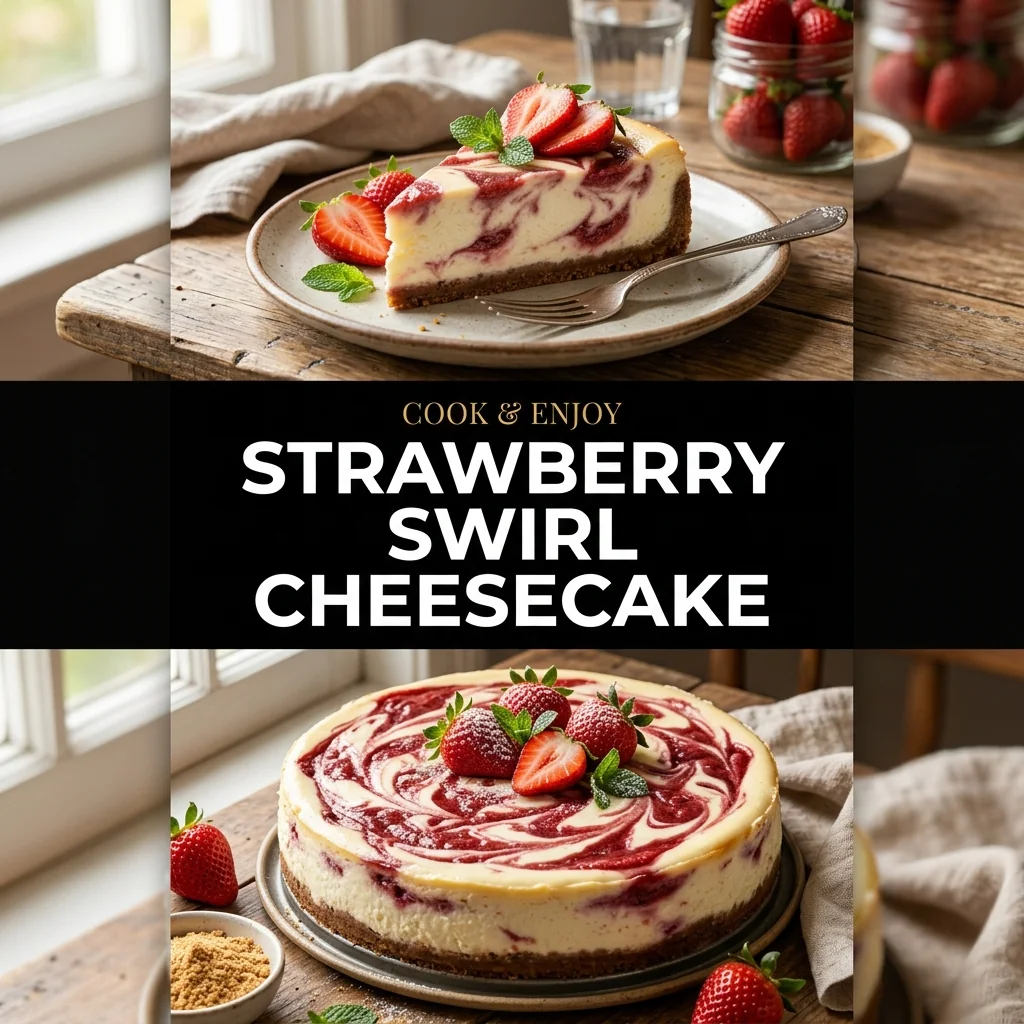
Strawberry swirl cheesecake represents the union of rich, dense dairy custard and the bright acidity of concentrated summer fruit. A common downfall of fruit-topped cheesecakes is a watery swirl that dilutes the custard, but cooking the berry puree into a tight reduction with a touch of cornstarch and fresh lemon juice ensures the swirl stays stable throughout baking. The New York-style batter provides a sturdy, velvety structure featuring both cream cheese and sour cream to deliver traditional tang. Baked gently within a protective water bath, this dessert delivers clean, distinct ribbons of crimson across an ivory surface, offering visual contrast and balanced spoonfuls that cut through rich dairy fats.
Reducing the Strawberry Puree
Fresh strawberries contain over ninety percent water, which can ruin the texture of a cheesecake if added directly. Simmering the berries with sugar breaks down cellular walls and evaporates excess moisture, concentrating the natural strawberry flavor. Adding lemon juice provides bright acidity that cuts through the cream cheese richness, while a small cornstarch slurry stabilizes the fruit matrix. The resulting gel must be cooled completely so that it maintains its density and suspends cleanly within the heavier cream cheese batter rather than dispersing into an indistinct pink layer.
Mastering the Swirl Pattern
Creating distinct, attractive swirls requires a light hand and shallow movements. Dollop the cooled strawberry reduction in nickel-sized drops across the raw batter surface rather than pouring it in wide pools. Using the tip of a wooden skewer or thin paring knife, drag lines through the dollops in continuous figure-eight motions. Keep the skewer shallow, penetrating only the top half-inch of the batter. Cutting too deeply can scratch the pre-baked graham cracker base, causing crust crumbs to float into the filling and muddying the marbling.
Preventing Surface Fissures
Cracks occur when cheesecakes expand from trapped air, bake too hot, or contract abruptly as they cool. Mixing the batter on low speed prevents the mechanical incorporation of air bubbles. The water bath ensures that heat transfers at a constant boiling point, moderating oven temperature spikes. Finally, cooling the cheesecake inside the turned-off oven with the door cracked open provides a gradual temperature decline, easing tension across the top and keeping your swirled pattern flat, smooth, and intact.
Before you start
Cook down the strawberry reduction until it is thick and glossy, similar to warm preserves. If the puree remains watery, it will sink heavily to the bottom crust during baking rather than floating as an artful marble pattern on top, potentially causing a soggy base. Always ensure the puree cools to room temperature before swirling; hot puree introduces steam and disrupts the set of the raw egg proteins in the batter.
THE RECIPE
Strawberry Swirl Cheesecake
12 servings · 40 minutes preparation · 75 minutes cooking · 480 minutes cooling, chilling or resting
Ingredients
Step-by-step instructions
- Preheat your oven to 325°F (163°C). Combine graham cracker crumbs, melted butter, and two tablespoons of sugar in a bowl until the mixture resembles wet sand. Press the crumbs evenly into the bottom of an ungreased 9-inch (23 cm) springform pan and bake for 10 minutes, then set aside on a wire rack to cool.
- Combine chopped strawberries, two tablespoons of sugar, and lemon juice in a small saucepan over medium heat. Simmer for 8 minutes until softened, puree with an immersion blender until smooth, then stir in the cornstarch slurry and simmer for 1 minute until thickened; cool completely before using.
- Wrap the base and sides of the springform pan with three wide layers of heavy-duty aluminum foil to guard against moisture ingress during the water bath bake. Set the wrapped pan into a large roasting pan with high sides and reserve on your counter.
- Beat the room temperature cream cheese and one cup of sugar together in a stand mixer on low speed for 3 minutes until silky and free of lumps. Scrape down the paddle attachment and the bowl thoroughly to ensure no firm pockets of cheese remain unmixed.
- Add the sour cream, vanilla extract, and sea salt to the cream cheese mixture, beating on low speed for 1 minute until incorporated. Add the room temperature eggs one at a time, mixing on the lowest speed until just combined to minimize trapped air in the batter.
- Pour the smooth cream cheese batter into the prepared pan over the par-baked crust. Drop tablespoons of the cooled strawberry reduction over the surface, then use a skewer or butter knife to gently swirl the fruit into the batter in figure-eight patterns, taking care not to scrape the bottom crust.
- Pour boiling water into the outer roasting pan until it reaches halfway up the side of the springform pan. Bake at 325°F (163°C) for 60 to 65 minutes until the perimeter is firm and set, but the center retains a slight gentle jiggle.
- Turn off heat, prop the oven door open slightly with a wooden spoon, and let cool for 60 minutes. Remove the pan from the water bath, strip foil, run a thin palette knife along the inner rim, and chill in the refrigerator for at least 7 hours before unlatching.
Kitchen notes
Cook down the strawberry reduction until it is thick and glossy, similar to warm preserves. If the puree remains watery, it will sink heavily to the bottom crust during baking rather than floating as an artful marble pattern on top, potentially causing a soggy base. Always ensure the puree cools to room temperature before swirling; hot puree introduces steam and disrupts the set of the raw egg proteins in the batter.
Storage & make-ahead
Keep the cheesecake refrigerated in an airtight container or lightly covered with plastic wrap for up to 5 days. For freezing, chill the uncut or sliced cheesecake thoroughly, wrap tightly in two layers of plastic wrap followed by aluminum foil, and freeze for up to 2 months. Thaw in the refrigerator over 12 hours before slicing.
An original recipe guide inspired by themes in our Pinterest research. Recipe has not been independently kitchen-tested. AI-generated image is illustrative; your finished dish may look different.
Frequently asked questions
Can I use frozen strawberries for the swirl?
Yes, frozen strawberries work well. Thaw them completely and drain excess runoff before simmering. Cook the puree slightly longer to evaporate the extra moisture introduced by freezing, ensuring the reduction reaches a thick, spoonable consistency.
Why did my strawberry swirl sink to the bottom?
The strawberry reduction was likely too thin or added while still warm. Cooking the fruit with cornstarch until visibly thickened and cooling it fully ensures equal density with the batter so the swirl floats on the surface.
How do I cut clean slices without smearing the red swirl?
Wipe a sharp chef's knife clean under hot running water, dry it thoroughly with a towel, and make a single downward slice. Wipe the blade clean before every subsequent cut to avoid dragging red puree across white sections.