WHY MAKE IT
A little comfort, a lot of flavor.
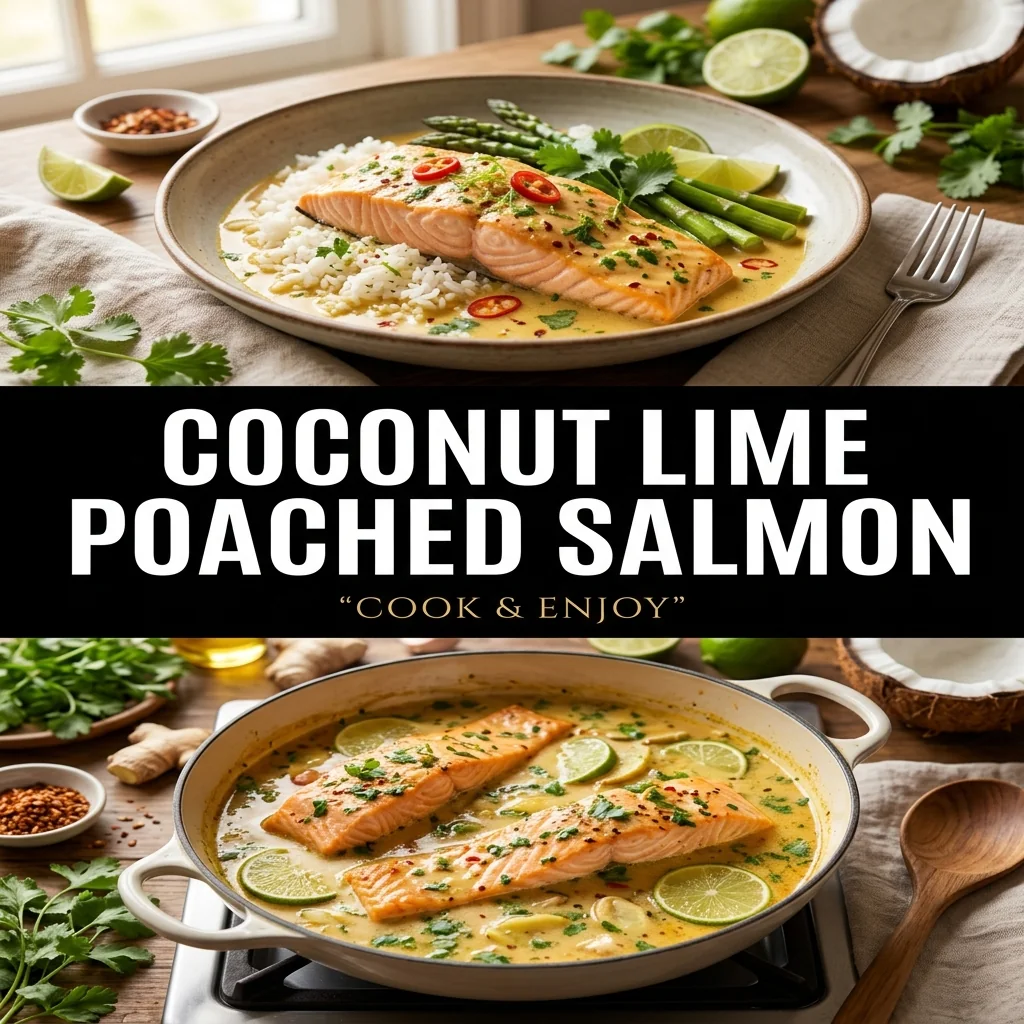
Poaching represents one of the most gentle and forgiving techniques for preparing fish, and pairing salmon with coconut and lime provides exceptional moisture control. Because salmon is an inherently rich fish with high intramuscular fat, submerging it into a seasoned, aromatic liquid prevents any risk of drying out. The natural creaminess of full-fat coconut milk cushions the fillets, keeping them silky while acting as an ideal carrier for pungent aromatics like grated ginger, garlic, and lemongrass. Balancing salty fish sauce against zesty lime juice yields a vibrant Southeast Asian flavor architecture that infuses every flake. Served straight from the shallow poaching skillet, this fragrant meal feels luxurious yet requires no complex kitchen equipment.
The Chemistry of Gentle Poaching
Unlike pan-searing or roasting, which utilize high dry heat, shallow poaching relies on steady hydrothermal energy to coagulate proteins evenly from the edge to the center. Keeping the broth between 170 F and 180 F prevents muscle fibers from contracting abruptly, which would otherwise squeeze out natural juices and force unsightly white albumin to the surface. Poaching skinless fillets allows the entire exterior to absorb aromatic compounds directly from the coconut milk and lemongrass broth, yielding a meltingly tender mouthfeel that dry cooking methods cannot duplicate.
Extracting Maximum Flavor from Aromatics
To achieve maximum complexity in a short cooking timeframe, prep your aromatics with precision. Bruising the lemongrass ruptures internal oil glands, releasing floral citrus notes into the fat-rich coconut broth. Grating fresh ginger on a microplane produces fine fibers and juice that integrate seamlessly into the broth without leaving harsh chunks. Red bird's eye chilies provide vibrant color and sharp capsaicin heat, which cuts through the heavy coconut milk. If you prefer milder heat, remove the seeds or substitute thinly sliced jalapeño.
Finishing with Fresh Citrus and Herbs
Heat destroys the delicate volatile esters responsible for fresh lime flavor, which is why citrus juice and zest must only be introduced after removing the skillet from the burner. Stirring fresh lime juice into hot coconut broth off the heat prevents curdling while imparting a crisp, refreshing punch. Fold in tender herbs such as Thai basil and cilantro immediately before serving to preserve their bright green color and herbal complexity. The resulting broth is so deeply flavorful it should be savored like soup.
Before you start
Maintaining an ultra-gentle poaching temperature is critical for succulent results; boiling coconut milk causes the emulsified fats to separate into an oily sheen and toughens the delicate salmon flesh. Bruising the lemongrass stalk with the flat spine of your chef's knife fractures its fibrous cell walls, releasing aromatic citronellol oils directly into the simmering broth without clouding the sauce.
THE RECIPE
Coconut Lime Poached Salmon
4 servings · 15 minutes preparation · 16 minutes cooking · 2 minutes cooling, chilling or resting
Ingredients
Step-by-step instructions
- Pat the skinless salmon fillets dry on all surfaces using paper towels, then season them lightly with 1/2 teaspoon of kosher salt. Set aside at room temperature while preparing the poaching aromatics.
- In a 12-inch wide, deep skillet or braiser, combine the full-fat coconut milk, low-sodium broth, bruised lemongrass stalks, grated ginger, minced garlic, sliced chili, fish sauce, and brown sugar. Whisk over medium heat until the sugar dissolves completely.
- Bring the aromatic coconut liquid to a gentle simmer. Reduce the burner heat to medium-low, cover partially with a lid, and allow the broth to simmer gently for 6 to 8 minutes so the ginger and lemongrass infuse their essential oils into the coconut fat.
- Uncover the skillet and carefully lower the seasoned salmon fillets into the warm poaching broth using a slotted fish spatula. The liquid should rise roughly halfway up to two-thirds of the sides of the fish.
- Maintain a bare simmer between 170 F and 180 F (77 C to 82 C), ensuring the broth produces small, occasional bubbles without boiling vigorously. Spoon the hot poaching broth continuously over the top of the fillets for 8 to 10 minutes.
- Check doneness by inserting an instant-read digital thermometer into the thickest part of the center fillet until it registers 145 F (63 C). The exterior should be fully opaque and yield tenderly when pressed.
- Remove the skillet from the heat source and discard the woody lemongrass segments. Stir the lime zest, fresh lime juice, chopped cilantro, and torn basil directly into the warm poaching broth around the fish.
- Rest for 2 minutes, then ladle generous portions of the fragrant coconut broth into shallow serving bowls alongside the poached salmon fillets. Serve warm with steamed jasmine rice if desired.
Kitchen notes
Maintaining an ultra-gentle poaching temperature is critical for succulent results; boiling coconut milk causes the emulsified fats to separate into an oily sheen and toughens the delicate salmon flesh. Bruising the lemongrass stalk with the flat spine of your chef's knife fractures its fibrous cell walls, releasing aromatic citronellol oils directly into the simmering broth without clouding the sauce.
Storage & make-ahead
Transfer leftover poached salmon and its aromatic coconut broth into an airtight glass storage container and refrigerate for up to 2 days. To reheat safely, transfer everything into a small skillet over low heat, gently warming the fish in its broth until reheated to 165°F (74°C). Do not microwave on high power, as coconut milk easily curdles. Refrigerate perishable leftovers within 2 hours (within 1 hour above 90°F/32°C), using shallow containers. If reheating, heat throughout to 165°F (74°C).
An original recipe guide inspired by themes in our Pinterest research. Recipe has not been independently kitchen-tested. AI-generated image is illustrative; your finished dish may look different.
Frequently asked questions
Can I use light coconut milk instead of full-fat coconut milk?
While light coconut milk can be used, the broth will turn out noticeably thinner and less rich. Full-fat canned coconut milk provides the necessary fat density to gently insulate the salmon during shallow poaching and creates a luscious, velvety sauce.
What if I cannot find fresh lemongrass in the store?
Substitute 1 tablespoon of finely grated lime zest or 1 tablespoon of prepared lemongrass paste from a tube. Add it directly to the simmering coconut broth alongside the ginger and garlic to achieve a comparable bright, herbal citrus profile.
How do I serve this dish as a complete meal?
Serve each fillet in a wide, shallow bowl over steamed jasmine rice or rice noodles. Ladle the hot coconut lime broth generously over the fish and rice, allowing the grains to soak up the aromatic broth.